
Art & Collecting
Why Fashion and Art Belong in the Same Conversation
Both are ways of deciding what you want to look at every day — and what you want to be seen with.
By I Want Her Shoes Club · September 8, 2026 · 5 min read
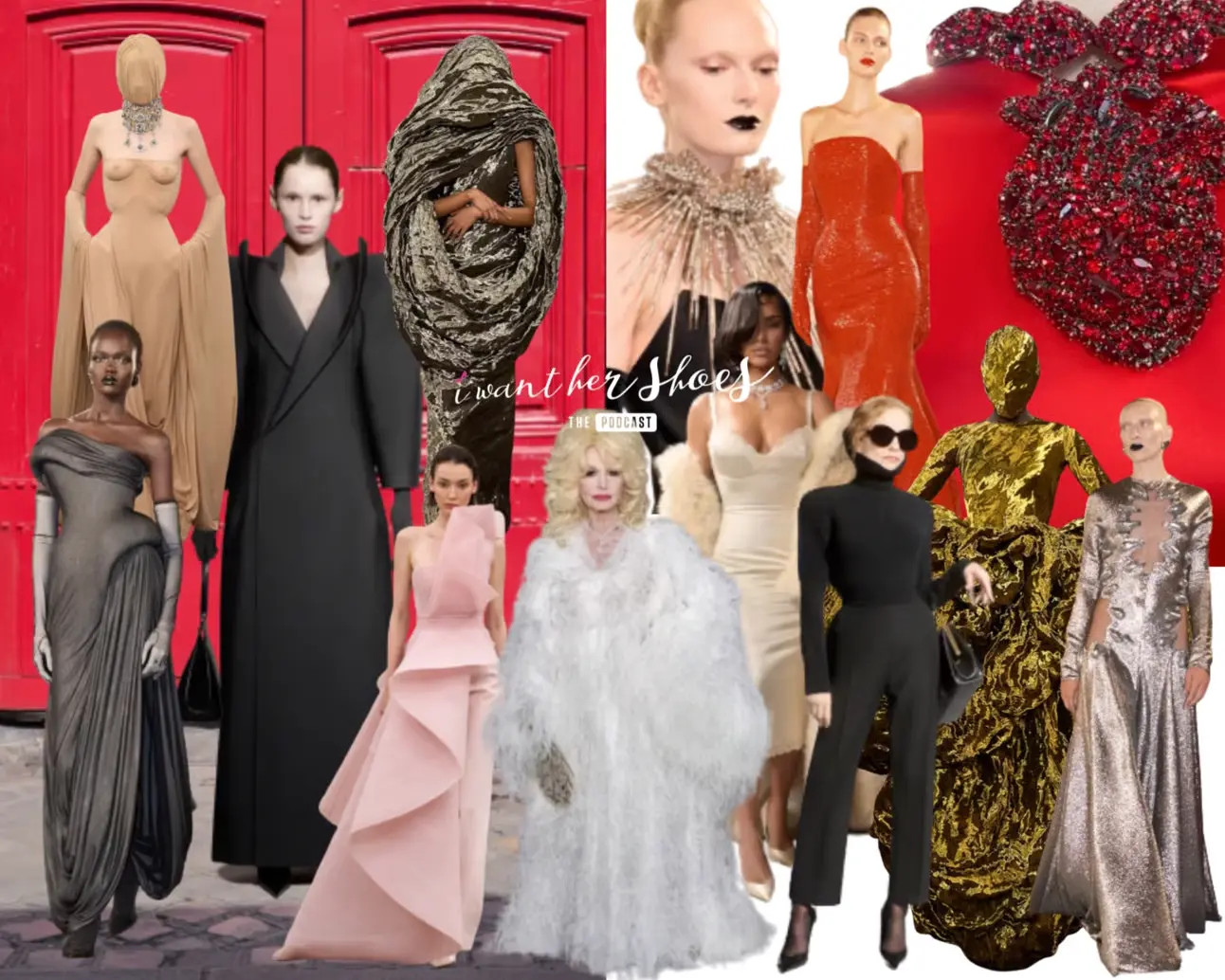
There is a habit of treating fashion as the lighter subject. Art gets the museum, the essay, the long silence in front of the work. Fashion gets the shopping bag. In practice the two run on the same instinct, and the women we know who are best at one are usually quietly good at the other.
They both start with looking
Collecting begins with noticing that you keep returning to the same thing. A particular blue. Line over colour. Work that is quiet rather than loud. Personal style begins the same way: you notice you reach for the same silhouette, the same weight of fabric, the same shoe, again and again, and eventually you stop apologising for it and start building around it.
Neither is about knowing the right names. It is about being honest regarding what holds your attention after the first ten seconds.
Constraint is the interesting part
Look at couture as construction rather than spectacle and the comparison becomes obvious. A garment has to hold a body, move with it, survive an evening. That constraint is what makes the good ones remarkable — the same way a painter's decision about the edge of the canvas is not a limitation but the whole argument.
This is why exhibitions that place fashion inside a museum tend to work. Seeing a dress at a standstill, lit properly, with room to walk around it, changes what you notice: the seam, the weight, the engineering under the drama.
Both are a record of a moment
A collection is a diary of what you believed was worth keeping. So is a wardrobe. Ten years from now the pieces you bought this season will tell you exactly who you were trying to become — which job you were reaching for, which city you were spending time in, whose company you were keeping.
The women who treat their wardrobes this way buy less and keep longer. They are willing to wait for the right thing. They know the difference between wanting an object and wanting the feeling they had the first time they saw it.
Where the conversation usually goes wrong
Two things make people defensive. The first is price, which turns every conversation into a test. The second is the idea that taste is fixed — that you either have it or you are found out. Neither is useful.
A more generous version of the conversation sounds like this: what have you seen lately that you cannot stop thinking about? What did you almost buy and walk away from, and do you regret it? Whose eye do you trust more than your own, and why? Those questions work as easily in front of a painting as in a fitting room, and nobody has to perform expertise to answer them.
How to practise it
Go to one exhibition a month with no intention of buying anything, and pay attention to which rooms you slow down in. Visit a gallery on a weekday, when there is time to ask a real question. When you next consider a significant piece of clothing, ask the same things you would ask about a work on paper: who made it, how, and will I still want to look at it in five years.
Do that for a season and something shifts. You stop buying to fill a gap and start choosing because you recognise the thing when you see it. That is the same muscle, used in two rooms.
The club version of this
Inside I Want Her Shoes Club, art and style sit in the same conversation on purpose — gallery visits alongside wardrobe strategy, collectors alongside women buying their first piece. Nobody is asked to already know. That is rather the point.
Further reading