
Art & Collecting
What to Know Before Starting an Art Collection
You need less money and more patience than you think. Here is the honest beginning.
By I Want Her Shoes Club · September 16, 2026 · 6 min read
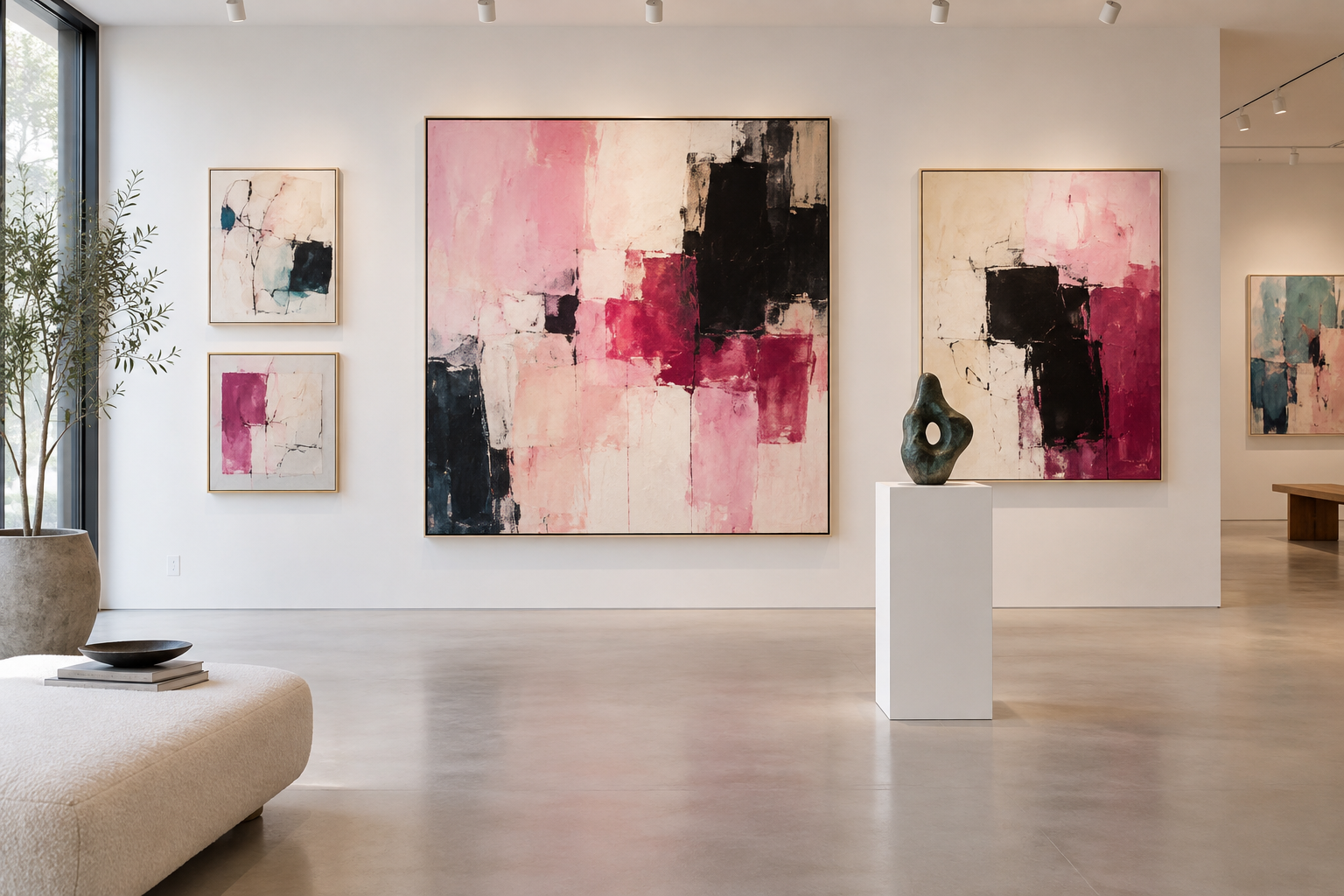
The word collection makes people think of a budget they do not have. In practice, a collection is simply more than one work, chosen on purpose. Here is what tends to matter in the first two years.
Train your eye before you spend
Give yourself a season of looking with no intention of buying: museums, gallery openings, art book fairs, open studios. Keep a note on your phone of every work you cannot stop thinking about a week later. Patterns appear quickly, and they are rarely what you predicted. That note is worth more than any list of artists to watch.
Start where the entry is real
Editions, works on paper, photography and artist books are where most serious collectors began. Art book fairs in particular are generous: the prices are approachable, the makers are standing at the table, and you can ask an honest question without ceremony. A first purchase in the low hundreds that you love is a far better education than a cautious one at ten times the price.
Buy from people, not screens
Galleries are not gatekeepers; they are the fastest way to learn. Visit on a quiet weekday, say plainly that you are early in collecting, and ask what they would suggest for someone starting out. Good galleries answer that question well — and the ones that do not have told you something useful.
Ask the four questions
Before any purchase: Who made this, and what else have they made? Is it unique or an edition, and what number? What is the medium and how should it be cared for? What is the provenance, and will I receive an invoice and certificate? Any dealer worth buying from will answer all four without hesitation, in writing.
Understand the real cost
The price on the label is not the total. Framing, shipping, insurance and — for anything significant — condition checks all follow. Budget roughly a further ten to twenty per cent, and a little more for works on paper that need conservation glazing. Keep the invoice, the certificate and a photograph of the work in one folder from day one; your future self will thank you.
Resist the investment story
Art can hold value. Most of it does not, and the works that do are difficult to identify at the start. Buy because you want to live with the piece. If it appreciates, that is a pleasant second outcome, not the thesis. This single reframe prevents nearly every regretted purchase.
Live with it properly
Hang at eye level, away from direct sun and away from radiators and bathrooms. Rotate what is on the wall if you can — pieces you stop seeing are pieces you stop loving. And resist the urge to fill every wall in the first year; space around a work is part of it.
Find an advisor when the numbers change
Below a certain level, your own eye and a few trusted gallerists are enough. Above it — when a purchase would genuinely matter financially — an independent advisor paid by you, not by the seller, earns their fee. Ask directly how they are compensated. The answer tells you whose side they are on.
The part nobody mentions
Collecting is social. The best works most people own arrived through a relationship: an artist met at an opening, a dealer who remembered what they liked, a friend who called about a studio sale. Showing up regularly, being curious in public and asking real questions is not networking — it is the mechanism by which a collection actually forms.
Start with one piece you love, bought from someone you liked talking to. The rest follows more naturally than you would expect.
Further reading